Palau
In 1999 I was once again fortunate to be selected to do a World Bank project in Palau. The Y2K problem was a big issue and there were fears that whole countries might have significant problems unless they planned for replacement of critical systems that might fail as a result. Palau was the place I was fortunate to draw amongst Vietnam, Samoa and other Pacific nations.
Koror and around
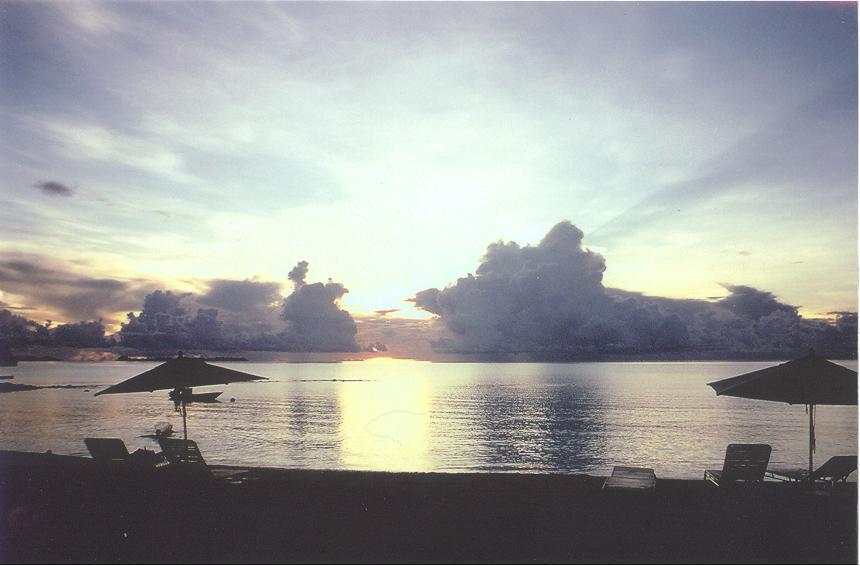 This is the kind of sunset you get most days in Palau. Looking to the
South China Sea towards Hong Hong. The average DAILY
rainfall is 10 mm. A drought is 5 days without rain. I loved the weather
- 26-34 degrees each day and 60-80% humidity. Sunsets were always good and you
could see a long way on a good day.
This is the kind of sunset you get most days in Palau. Looking to the
South China Sea towards Hong Hong. The average DAILY
rainfall is 10 mm. A drought is 5 days without rain. I loved the weather
- 26-34 degrees each day and 60-80% humidity. Sunsets were always good and you
could see a long way on a good day.
It was hard to imagine that this island is so far away from everything. During WWII it was a strategic location for both Japan and the Allies because it was the only place where airstrips could be built for hundreds of kilometres.
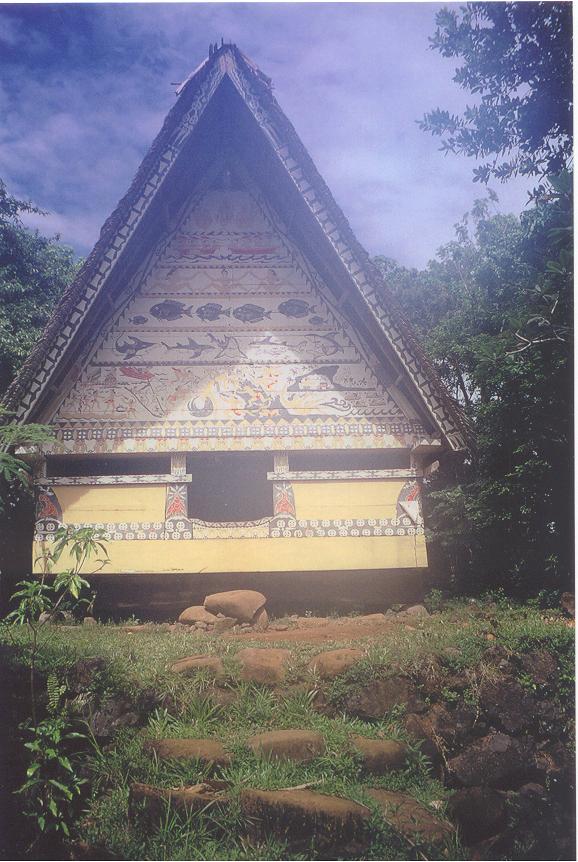 This
is where the traditional council meetings were (and sometimes still are)
held. Palau is a modern country that understands its past better than
most. The traditions are Micronesian but have similarities to the
Melanesian ones I saw in Papua New Guinea.
This
is where the traditional council meetings were (and sometimes still are)
held. Palau is a modern country that understands its past better than
most. The traditions are Micronesian but have similarities to the
Melanesian ones I saw in Papua New Guinea.
There is a long history of population in these islands, even though they are not easily accessed by sea. Nearby islands have a history of cannibalism, much the same as many other areas of the Pacific.
The local name for the set of islands is Belau. It is closer to the way it is
said aloud. Babeldaub is the biggest island but Koror has the most population
living there.
Stone money is used in other islands but on Palau they used a different type. It looks like jewellery made of shells but the items are very rare and valuable.
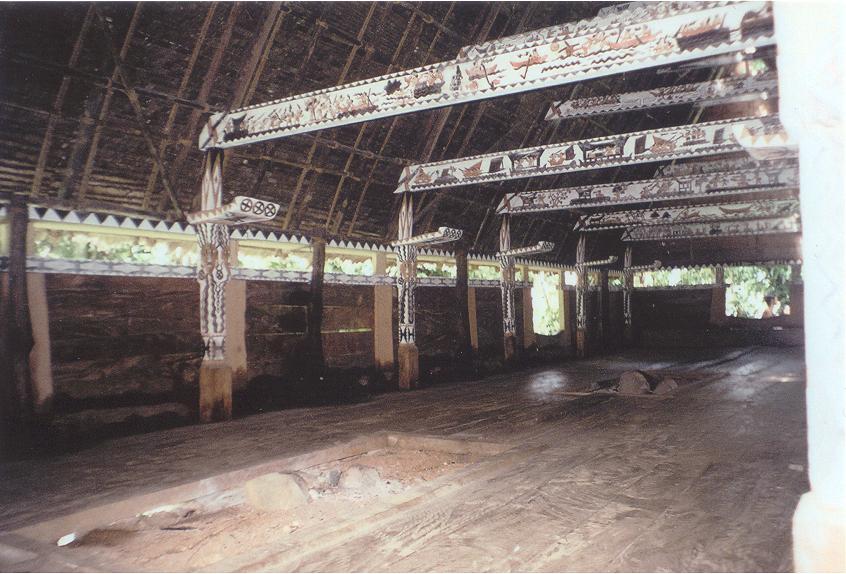 This
is what it looks like inside the hut. Women have an important part in society.
They effectively own the land and have a say in what happens at council. Men
have a role that traditionally involves hunting and warfare. These days, hunting
involves getting out in a motorised boat and spear fishing.
This
is what it looks like inside the hut. Women have an important part in society.
They effectively own the land and have a say in what happens at council. Men
have a role that traditionally involves hunting and warfare. These days, hunting
involves getting out in a motorised boat and spear fishing.
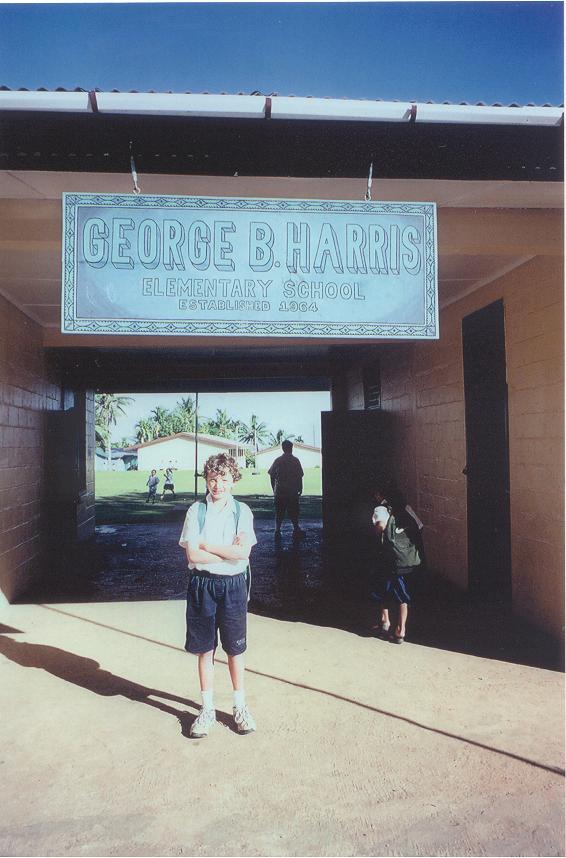 Thanks
to the generosity of the local school and a good word from the Vice
President, Tris was able to go to school in Palau and accompany me on the final
phase of my work. Highlights for him were playing soccer and the food
provided at lunchtime.
Thanks
to the generosity of the local school and a good word from the Vice
President, Tris was able to go to school in Palau and accompany me on the final
phase of my work. Highlights for him were playing soccer and the food
provided at lunchtime.
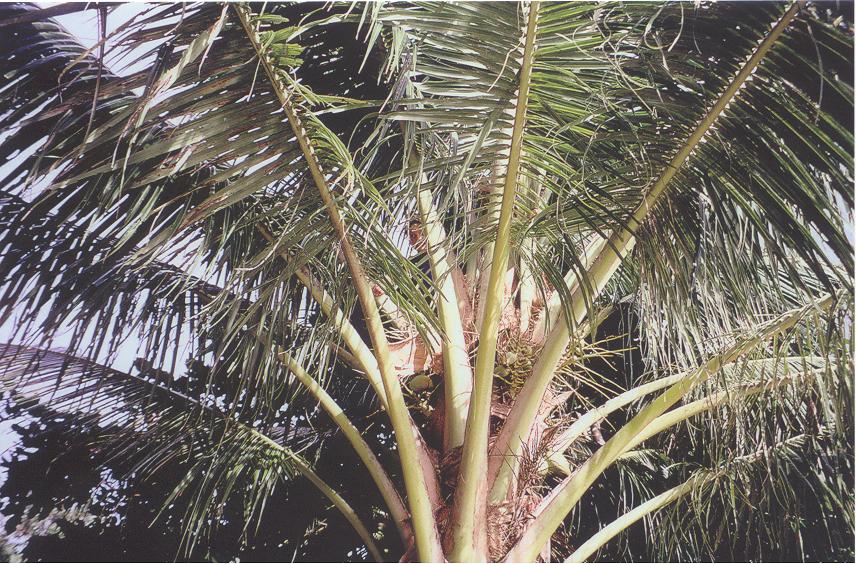 Kids
do what is natural in the tropics. As well as climbing trees, chasing
piglets in the mangroves and drinking coconut milk were the thing to do
after school. Then it was a swim in the pool, food and cartoon network
on the satellite TV. There was no chance of stopping any of them climbing the
coconut palms so nobody does. They are safer there than in most cities anyway.
Kids
do what is natural in the tropics. As well as climbing trees, chasing
piglets in the mangroves and drinking coconut milk were the thing to do
after school. Then it was a swim in the pool, food and cartoon network
on the satellite TV. There was no chance of stopping any of them climbing the
coconut palms so nobody does. They are safer there than in most cities anyway.
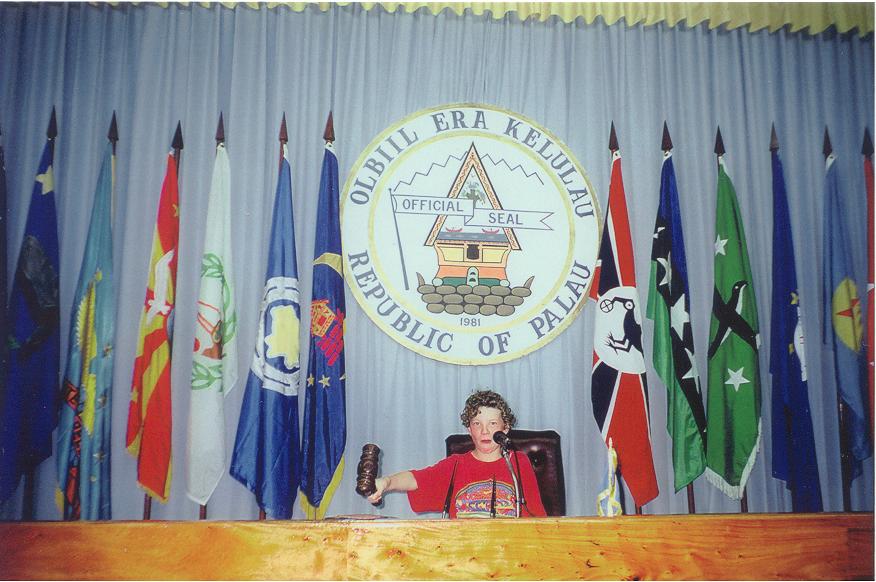 This is where the President and the other representatives of the Government
meet. Palau has a parallel Republican Government with the traditional
council of chiefs. Each arm of Government has its overlapping role. It
was possible to just go in and sit there. Nobody minded at all.
This is where the President and the other representatives of the Government
meet. Palau has a parallel Republican Government with the traditional
council of chiefs. Each arm of Government has its overlapping role. It
was possible to just go in and sit there. Nobody minded at all.
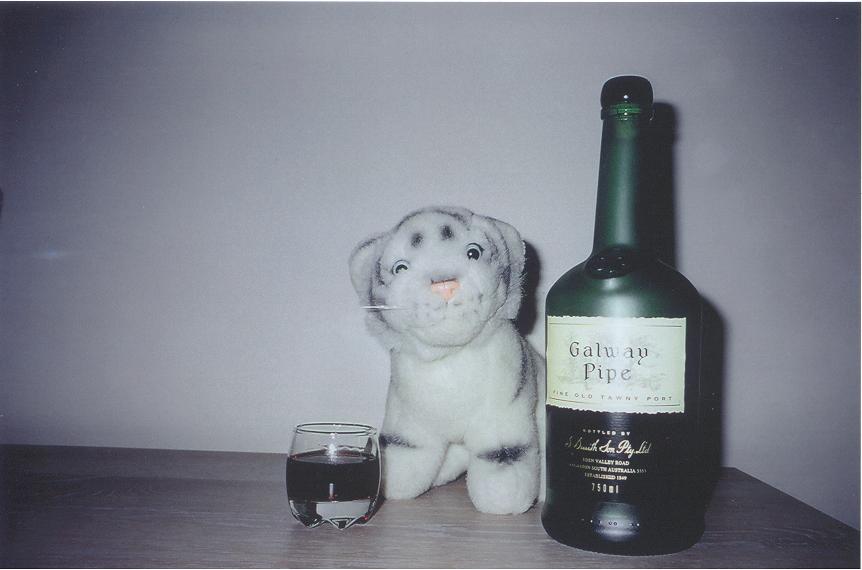 An
infamous photo ... the white tiger was a naughty drunkard :p
An
infamous photo ... the white tiger was a naughty drunkard :p
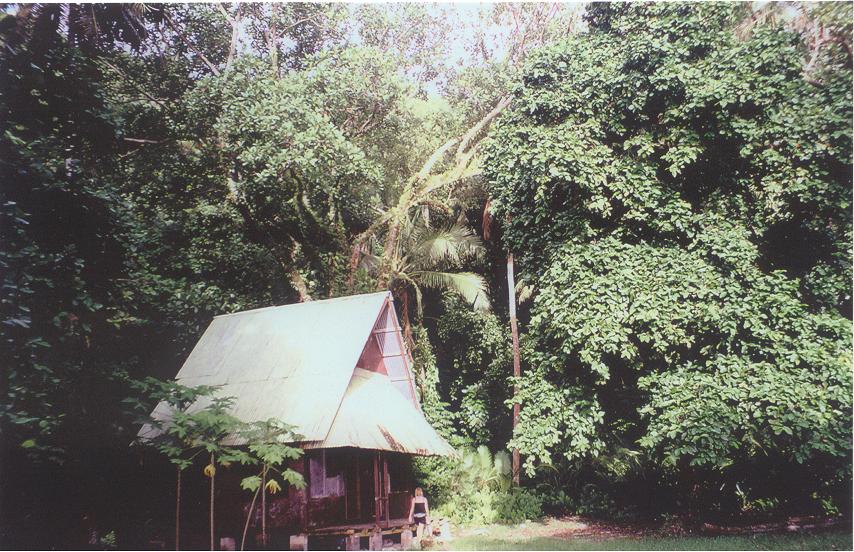 We
were fortunate to be able to go for a long sea kayak tour of the Rock
Islands. Margie ran one of the nicest restaurants on the islands and let
us use the family beach to sleep overnight. There were plenty of sand
crabs to keep us awake at night but sleeping on the beach is quite
comfortable when the overnight temperature drops to a low 26 degrees C.
Daytime temperatures are always around 32 degrees.
We
were fortunate to be able to go for a long sea kayak tour of the Rock
Islands. Margie ran one of the nicest restaurants on the islands and let
us use the family beach to sleep overnight. There were plenty of sand
crabs to keep us awake at night but sleeping on the beach is quite
comfortable when the overnight temperature drops to a low 26 degrees C.
Daytime temperatures are always around 32 degrees.
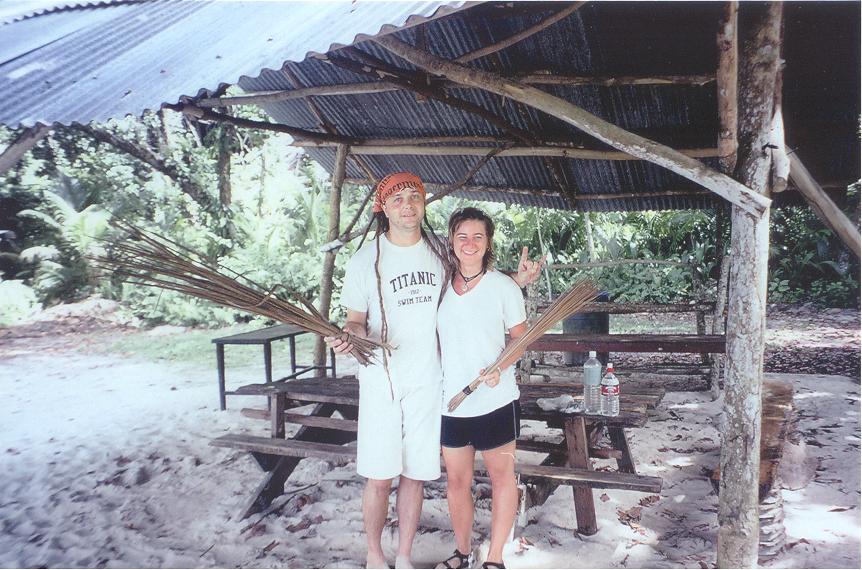 Dean
and Carla were with us on the kayak trip. Both had come to Palau as part
of the youth aid program from the USA. Seen here at Margie's Beach. Dean was
a locally engaged consultant to help with preparations for Y2K. I enjoyed the
time I spent with these people and would love to go back there again soon.
Dean
and Carla were with us on the kayak trip. Both had come to Palau as part
of the youth aid program from the USA. Seen here at Margie's Beach. Dean was
a locally engaged consultant to help with preparations for Y2K. I enjoyed the
time I spent with these people and would love to go back there again soon.
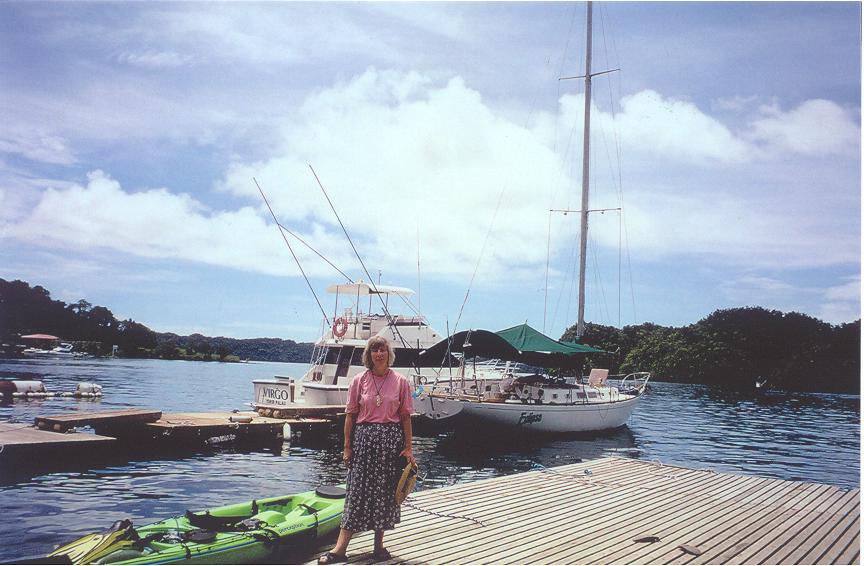 Liz
was also with us and was part of the team working on the Y2K response in
Palau, on behalf of the World Bank. There was a weekend in the middle of our
work and we took the opportunity to kayak. The Rock Islands are completely
surrounded by the coral reef and are quite safe for kayaking, even though it is
in the middle of the Pacific. About the only problem is tiger sharks near the
reef itself.
Liz
was also with us and was part of the team working on the Y2K response in
Palau, on behalf of the World Bank. There was a weekend in the middle of our
work and we took the opportunity to kayak. The Rock Islands are completely
surrounded by the coral reef and are quite safe for kayaking, even though it is
in the middle of the Pacific. About the only problem is tiger sharks near the
reef itself.
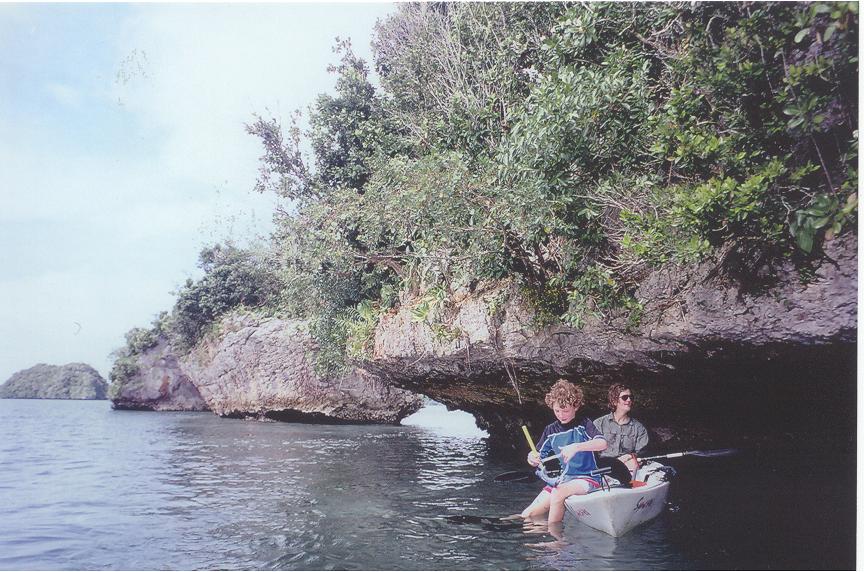 There we are kayaking. I was resting in the shade and Tris was about to go snorkelling.
Liz took this photo. On a previous visit I had joined a party that kayaked about
80 Km on a weekend. I have memories of a jellyfish lake where the jellyfish had
evolved to have no sting because they have no predators. I saw giant clams. I
also saw the dead coral caused by global warming.
There we are kayaking. I was resting in the shade and Tris was about to go snorkelling.
Liz took this photo. On a previous visit I had joined a party that kayaked about
80 Km on a weekend. I have memories of a jellyfish lake where the jellyfish had
evolved to have no sting because they have no predators. I saw giant clams. I
also saw the dead coral caused by global warming.
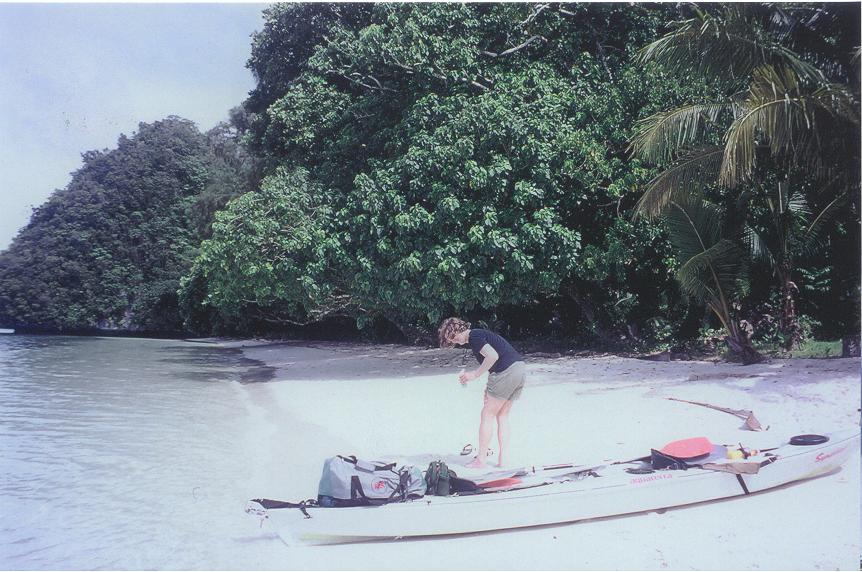 View
along Margie's Beach. This is a very peaceful place but is often visited
by power boats taking tourists to the islands. Kayaking is the best way I
know to travel. It is hard to know whether the standard tourism here is good or
bad. It is not very considerate of the natural environment. Locals still have
the right to hunt sea turtles that are an endangered species. The clash between
globalisation and local customs is quite evident.
View
along Margie's Beach. This is a very peaceful place but is often visited
by power boats taking tourists to the islands. Kayaking is the best way I
know to travel. It is hard to know whether the standard tourism here is good or
bad. It is not very considerate of the natural environment. Locals still have
the right to hunt sea turtles that are an endangered species. The clash between
globalisation and local customs is quite evident.
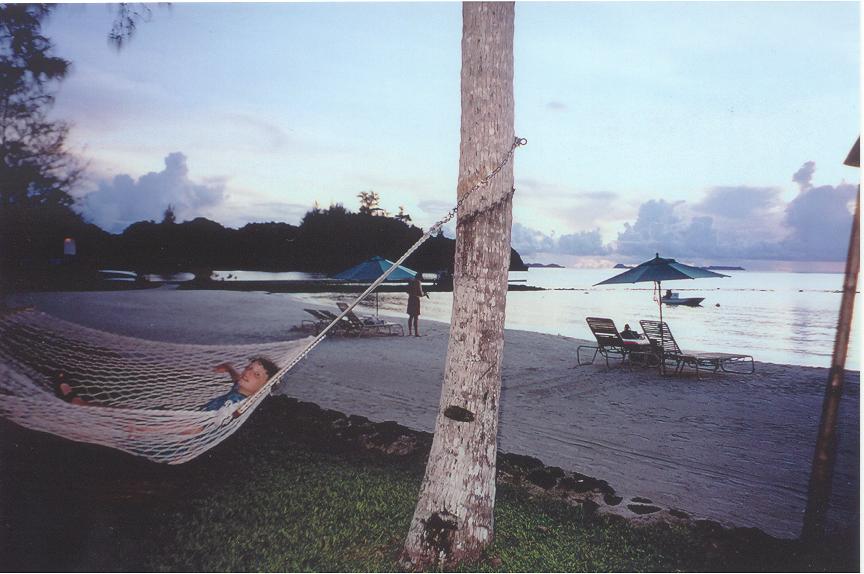 The
Pacific Paradise Resort is a popular place to stay for foreign tourists. It
is a
nice place to visit but I preferred to stay in a more 'local' place.
This spot overlooks the place where Japanese shipping was anchored during
WWII. The many (over 100) sunk ships around the island are one of the
attractions for diving.
The
Pacific Paradise Resort is a popular place to stay for foreign tourists. It
is a
nice place to visit but I preferred to stay in a more 'local' place.
This spot overlooks the place where Japanese shipping was anchored during
WWII. The many (over 100) sunk ships around the island are one of the
attractions for diving.
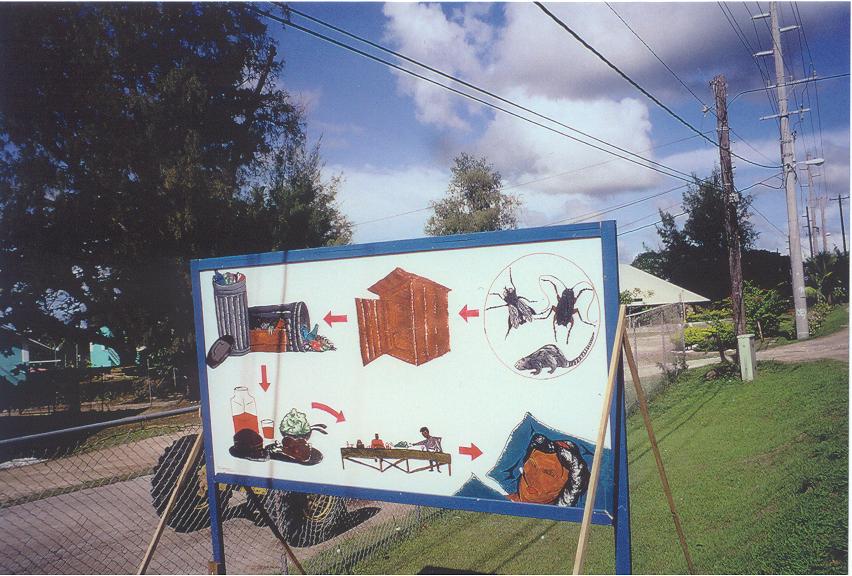 It is not hard to see the message form this sign. It is outside the hospital on Koror.
The USA Government pays Palau about $45 million a year to use the air and naval
bases. The population of Palau is about 30,000. This means that the USA is
responsible for most of the cash economy in Palau. Something like 60% of the
economy is subsistence, but that is a bit misleading because subsistence is
actually going out in a motor boat and fishing.
It is not hard to see the message form this sign. It is outside the hospital on Koror.
The USA Government pays Palau about $45 million a year to use the air and naval
bases. The population of Palau is about 30,000. This means that the USA is
responsible for most of the cash economy in Palau. Something like 60% of the
economy is subsistence, but that is a bit misleading because subsistence is
actually going out in a motor boat and fishing.